
My Guide to Adapting and Getting Involved
By Vincenzo DeMaio
Fall 2025

College is a scary idea for any incoming student. Researchers have argued that the first year of college is the most difficult period of adjustment a student faces. The excitement of the fun experiences to come met with the growth fear of being away from home, not making any friends, or even uncertainty about whether you’re going down the right path. But I’m here to say that it’s going to be okay. I can say that because I was once that high school senior too.
The newfound independence, mixed with nothing but new faces and a new environment. It can be scary, but I have a guide for you to help make it manageable. Have you heard some of the tips and advice I’m about to share before? Likely. Does it work? Yes, and that’s why I can tell you that I thought it was cheesy and repetitive, but it was my best friend.
Introduction: My Experience
I have never moved houses, however schools were different story. I went to public kindergarten, but moved to a private Catholic school for first through eighth grade. Now, I would say that this gave me an early introduction to gathering the skills needed to adapt to a new school environment, but first grade isn’t exactly that intense.
What did give me some experience in the area was after eighth grade, I attended public high school. High school was very scary for me. I went from my homey class of 32 kids that I had been with since first grade to entering a class that was the size of my entire former school and had no familiar faces. I was forced to adapt. Some days were really tough and I wanted to return to the familiarity. But I persevered and kept a smile on my face. Four years later, I was headed out the door to do the same thing all over again.
I was determined to make friends and a name for myself. At North Central, we have freshman classes called CARD classes and through this I made a few friends. I asked those friends to breakfast, went to the engagement fair (where all the clubs put on a showcase), sat with people at lunch who weren’t eating with anyone, and introduced myself and sat next to people in my classes. Heck, I met my best friend by complimenting his shoes. Two years later, I successfully ran to be the Chief of Staff (essentially the Vice President) of Student Governing Association. Through that I was able to make more bonds and have fun by making positive change to campus. This year, I was elected to be the President. Where I’ve been able to give speeches to faculty, make focused efforts on improving students life, network with school leadership (such as my dean and the president of the college) and much more.
Before Even Arriving on Campus
There are a few things that you’re able to do even before you arrive on day one of classes. For instance, often colleges have class Instagram pages where you can do an introduction post about yourself. Kristin Guido, the Associate Director of Admission Outreach at North Central College, describes, “People will end up sharing interests, likes and dislikes, and then they might end up deciding that they want to meet roommates, or at least just knowing somebody so that when they come to.” This allows for almost a dating-app style of chatting, where if you think someone is cool, you can go on their profile and message them then. I made a few good freshman-year friends this way, but don’t just take my word for it. When Kristin was asked if relationships are made through those social media pages, she said, “Oh, definitely yes.”
Another tip is to go to any sort of admitted students days or even take another visit day. While this may be difficult if your college/university is far, the visit is often worthwhile. Kristin said more specifically, “[At Admitted Student’s Day, Admissions try to] create an environment that's comfortable enough that people feel like they can talk to one another because their roommate could be in the room. Their classmates could be in that room, and they just don't realize it yet.” So, use that environment to your advantage! This is also a great opportunity to potentially meet up with some of those people you have been messaging on Instagram. I personally made and confirmed a few friends through this exact method!
Just Arriving on Campus
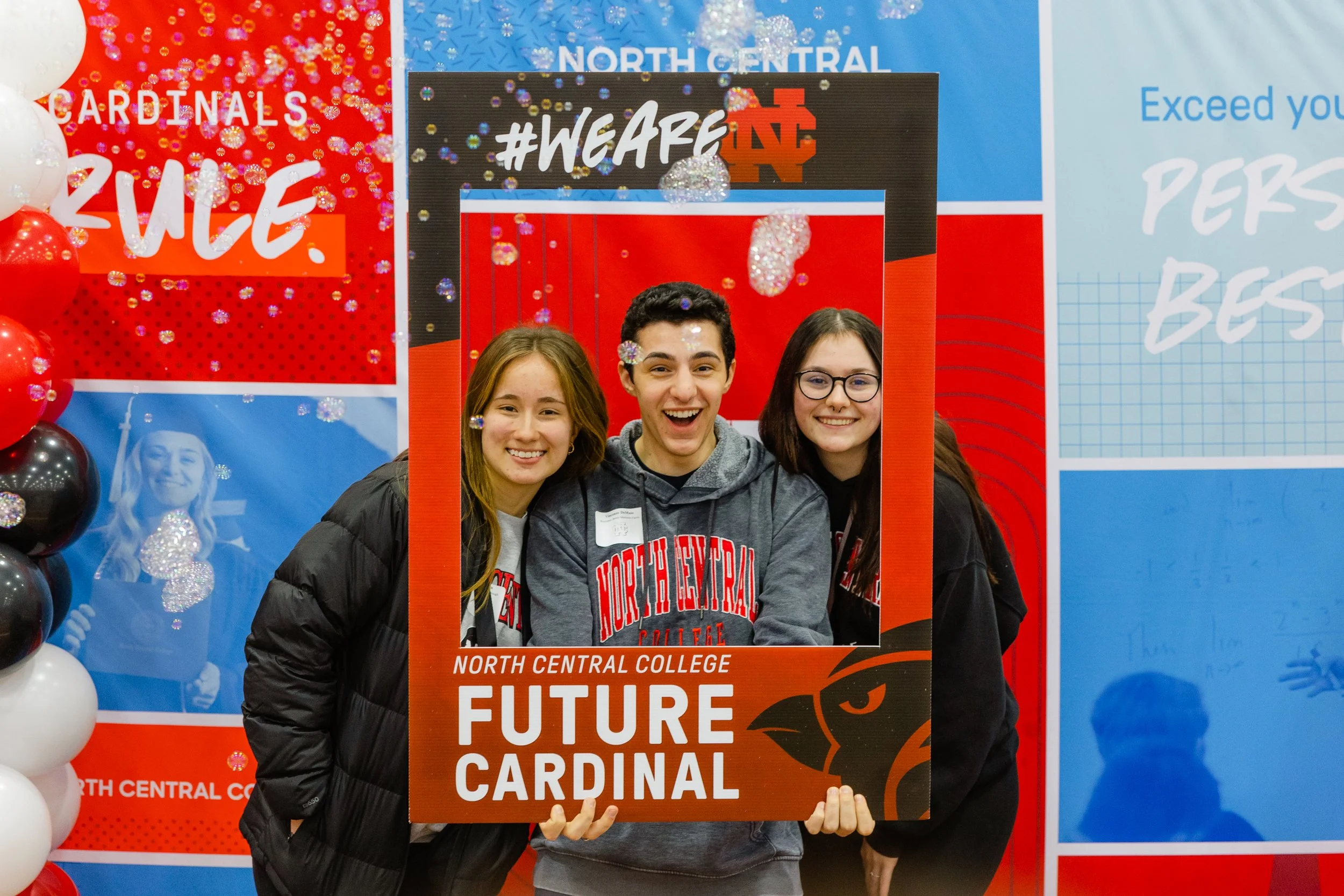
Welcome week or orientation week is a huge celebration of new students. This is an amazing opportunity to go out and meet people. As a matter of fact, I met half of my friend group from welcome week.
Some of the biggest principles when you get onto campus, and throughout your freshman year, are as follows:
Be you. This is a completely new environment and there a hundreds of different personalities, don’t try and be a repeat of someone else. It takes the least effort, and you’ll find people who you’ll more genuinely connect with.
Be outgoing. Something that Kristin said that resonated with me was, “Don't let awkwardness prevent you from establishing yourself at the institution.” I know this may not be easy for everyone. However if that means trying to identify at least one person who looks more outgoing and talking to them, they’re likely to introduce you to a lot more people.
Be confident and positive. Things may not go your way some days–I know they certainly didn’t for me certain days, but know that there’s a whole new day in front of you. I spoke with my friend Colin Fredrick who is currently a senior at North Central College who transferred from College of DuPage and before that, University of Wisconsin-Whitewater, so quite a bit of experience with new environments. His advice was, “If you’re a freshman going to college, just remember that everybody wants to make friends. Start knocking on doors, start introducing yourself to people. Everyone wants to know somebody!”
Although these bullet points may be cheesy and repetitive, I want to reassure you that it’s because they work. I heard them when I was new to school, and I’m repeating them to you now.
Settling into Campus
Now that Welcome Week has come and gone, it’s time to settle into a routine. Walking your schedule before class start is a great way to eliminate some stress from the first day of classes. I personally have also found that getting to classes 15 minutes early on the first day of classes has also been helpful. This is because you get to see where other people are and maybe start a few conversations with some potential new friends. Also, it’s an unwritten rule (unless the professor affirms it to be a written rule) that pretty much where you sit on the first day is where you’ll sit the rest of the semester.
Simply wandering around campus is another great way to start memorizing the landscape, while also offering a chance to talk to new people as you pass by them. The dining hall(s) and libraries are going to be a great place to interact with new people, with an easy medium. Make sure to also take note of where the printers are and your campus mailbox is (and the address of it, of course)!
Academic Life
Classes are obviously another huge part of higher education. There are a couple of questions you should ask yourself when planning your class schedule. When do you focus the best/when do you work best? If you don’t mind taking morning classes, loading up on earlier classes is a nice way to get done early in the day. For example, I took four classes my freshman year, two on Mondays/Wednesdays/Fridays and two on Tuesdays/Thursdays, and I was able to be done with my classes on all days by 11:30 am. Also, according to Oxford Learning, “Students’ brains tend to be sharpest in the morning, after a refreshing night’s sleep and a nutritious breakfast.” That being said, if you prefer to sleep in or stay up late, afternoon/night classes may be for you. Make sure to factor in club meeting times, potential work hours, etc.
A factor that could also make or break a class in college is the professor. Unlike high school where teachers are required to adhere to strict state educational guidelines and have little room for teacher-determination, professors have much more creative liberty. According to the American Association of University Professors, college and university faculty are entitled to freedom to select materials, determine the approach to the subject, make assignments, and assess student performance. A really helpful resource for a student, that won’t be promoted by any of your college resources, is RateMyProfessor.com. While the information must be taken with a grain of salt as some students may have had a particular problem with the professor or hard time academically with the teaching style, it is generally a good gauge.
Money and Resources
Looking into what resources you have access to as a student is really important. A study from the University of Michigan revealed that 41% of college students report symptoms of depression and 35% report symptoms of anxiety. With that being said, know what mental health resources are available to you. For example, North Central College students have access to TimelyCare. According to the college, “TimelyCare provides access to 24/7 mental health and medical telehealth services to registered, full-time students, with no cost at the time of visit!” Knowing you have access to these resources before you need them is crucial. Sometimes your studies will keep you up late and you don’t want to feel trapped after business hours because your college’s counseling office is closed.
Something that may be essential to you if you are paying for any portion of your own college or personal expenses is a job. Whether it be an on-campus or community business, it’s important to think about a strategy. A 2018 report from Georgetown University’s Center on Education and the Workforce found that around 80% of students in college work while in school. That may mean there will be firm competition for new positions and varying availability due to returning student-workers. Asking orientation staff or campus mentors when those open may be wise.

Be confident and positive. Things may not go your way some days–I know they certainly didn’t for me certain days, but know that there’s a whole new day in front of you.
Getting Involved on Campus
Probably one of the most important keys to getting acquainted with a new college environment is getting involved. This may take various shapes for you. There are several quality avenues and different commitment levels available at any one school. According to Siam Goorwich, “Students involved in sports or societies are five times more likely to continue their studies.”
There are student organizations that are likely to be your most committal, however likely some of the easiest ways to find people who share similar interests or values. There will likely be an involvement fair where all clubs are at. Clubs, depending on the size of your school, may have varying levels of acceptance. Make sure to find a list of all available student organizations and mark any that sound interesting– some may just surprise you. Maren Keller, Program Coordinator for Student Activities at Illinois State University, recommends, “[Students] should join at least 2 clubs. One that appeals to something that sounds found to you, one that lights you up. And one club organization appeals to your major or aligns with your major.”
An organization that I was interested in and that still surprised me was the Student Governing Association. As the President of SGA at North Central College, I can tell you that SGA isn’t like your high school’s student council. It’s a real platform for change where you’re able to make positive change to campus policies and the student experience.
If you’re already involved in a sport, perfect! You will already have a group of people you can gel with. However, if you played sports all throughout your life but didn’t want to go collegiate with it like me, there are options there too! Your school may offer club or recreational sports. For example, the University of Illinois Chicago offers 18 student-led sport clubs.
Your university may also have fraternities (or “frats”) and sororities. While social frats and sororities are the most renowned, they are not the only type. According to the University of Michigan, “There are… social, pre/professional, service, honorary, and culturally-based fraternities and sororities.” All types of Greek life are good opportunities for building a network and, as some consider it, an “on-campus family.”
Honor Societies are also an option, however will likely be down the road (often only being offered to upperclassmen). Similar to how they work in high school, they represent prestige in your field and community service. They also look good on a college student’s resume. According to Ask a Manager, “Honors programs and some extracurriculars can show things like initiative, drive, smarts, and ability to achieve.”
If you aren’t looking to be a part of some sort of organization, that’s alright too! Finding the community calendar will be critical for this. You can simply attend some of the community events that the aforementioned clubs are hosting. If not, universities and colleges work hard to host events for their students to enjoy.
Conclusion
I hope this guide has been helpful to you and has reassured you that adapting to your new environment is achievable. It won’t come instantaneously and certainly not without effort, but it is doable!
College is a fresh start full of opportunities- friendships, experiences, and growth are waiting if you’re willing to put yourself out there. Connect early, be open and confident, explore your campus, and take advantage of resources that support your success. Get involved, try new things, and don’t be afraid to step outside your comfort zone- whether that’s joining a club, attending an event, or simply saying hello to someone new. The more you engage, the richer your college experience will be, and the stronger the community you build around yourself.

Vince DeMaio is a junior at North Central College, double-majoring in marketing and business economics. He currently serves at the President of Student Governing Association and sits on the School of Business & Entrepreneurship Student Advisory Board. Professionally, he currently works for state government and has been in the sphere for six years. In the future, he hopes to go into sales for a career. He loves traveling, following elections, going to the movies, playing volleyball, watching the Cubs, and hanging out with family and friends. He specializes in working with people, public speaking, making more efficient processes, and project management.