
How to start drinking coffee in college: A comprehensive guide to your first buzz
By Johnny McGillen
Fall 2025
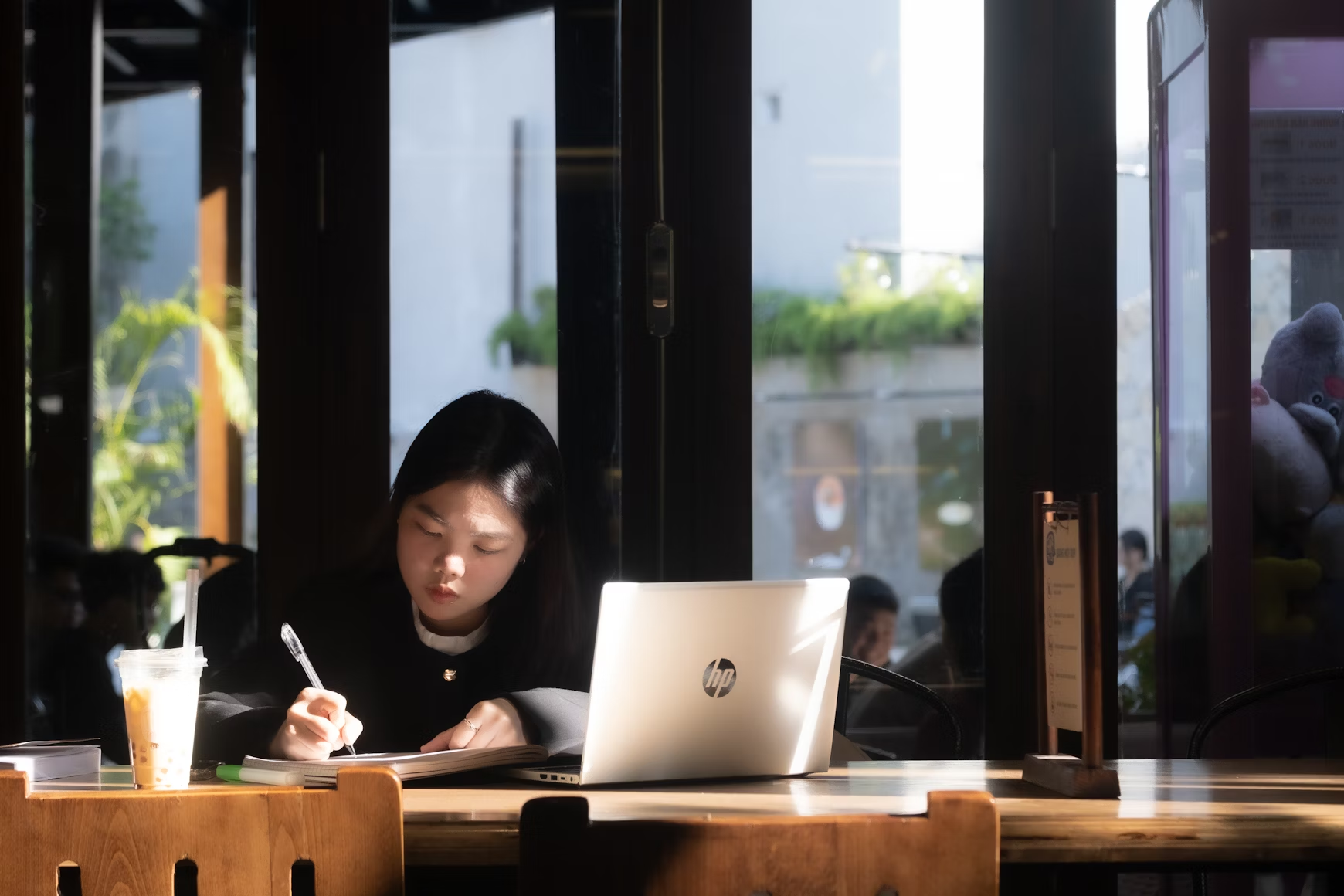
The morning sunrise trickles through the window, illuminating the quietly buzzing coffee shop in a warm amber glow. The hiss of steamed milk cuts through the jazz playing softly from the speakers overhead. Steam drifts up lazily from your mug and dances playfully in circles before getting gently swept upwards towards your nose. The flavors begin to come together -- lemon, then blueberry, then blackberry!
You see, coffee is about more than just drinking “hot bean juice”-- it’s about the culture, the people, the experience! Everything that surrounds coffee has something to offer, you just have to know where to look. And if anyone understands the true value of coffee, it’s college students running on three hours of sleep and sheer willpower.
If you’re one of these sleep-deprived college students who wants to take their first steps into the world of caffeine, or if you’re already a coffee enjoyer who wants to learn a little more about the culture or science behind coffee, this blog’s for you.
According to the National Library of Medicine, 56% of high schoolers drink coffee every day. This number jumps up to 72% for college students! This jump in coffee intake is no accident -- according to Julian Diaz, a junior studying to be an Electrician, college classes demand more energy, motivation, and alertness compared to high school. Caffeine can often be the remedy for students looking to power through these hurdles.
What kind of caffeine should a college student try?
The caffeine market can definitely feel overwhelming at first, what with energy drinks, teas, canned coffees, vapes (yes, caffeine vapes are a thing), and 10,000 cold brew brands all fighting for your attention. But when it comes to caffeine, brewed coffee is the OG. There’s a reason it’s been mainstream for over 600 years. It’s cheap, it’s everywhere, and it’s actually not too hard to make it yourself.
However, starting to drink coffee in college can be tougher than it looks. There’s actually quite a few barriers to entry: not knowing where to start, choosing what kinds of drinks to have (decision paralysis is real), having no money or time, avoiding the afternoon crash, avoiding destroying your sleep schedule, and learning how to DIY a coffee that doesn’t taste like burnt dirt. Luckily, all those problems are fixable once you understand the basics of how to drink coffee in college.
Where to find coffee: The importance of coffee shops
First off: go to a coffee shop. There’s over 2,500 coffee companies in the U.S, and if you’re on a college campus, there’s probably five within walking distance. Coffee shops are, in my humble opinion, a severely underused college resource. It’s a place to decompress from the stresses of homework, exams, sports, and new friendships. In the words of local coffee legend Kalki Tesfaye, owner and operator of Addis Cafe, “Coffee’s all about the community -- it’s about drinking it together. It’s therapeutic. You might not even really notice it, but you get to have a moment to yourself. It’s a mental break where you leave rejuvenated -- ready to go.” That moment to yourself can be the reset a student needs in the middle of a chaotic week. It’s a chance to slow down, breathe, and clear your head before jumping back into deadlines and responsibilities. Coffee shops are spaces where you can meet new people, jam out to Tame Impala’s new album, and discover new and exciting drinks you’d never heard of. Walking out the doors with a caffeine boost also helps you refocus, finish your work, and feel just a little more in control of your day.
How to navigate a coffee shop menu
Before you immerse yourself in coffee culture though, you’ve gotta figure out what you’re going to order! Here’s the very basics of what every coffee shop should offer:
Drip coffee: the classic, no-funny-business way to get your caffeine fix. Hot water passes through ground coffee and drips through a filter into a pot below. It’s simple, efficient, and what most people think of as “regular coffee.” Most coffee shops have two main drip options: batch brew, and pourover.
Batch brew is made in bulk and kept warm in a vat throughout the day. Cups of these are usually a bit cheaper, and are always ready-to-go (helpful if you’re in a rush) but can sometimes taste a bit stale to a coffee-drinker with keen senses.
Pour-overs, on the other hand, is where each cup is brewed individually by hand through a precise pouring strategy. These tend to be more expensive than batch brew, and take around 5 minutes to finish brewing -- but the payoff is worth it every time. The pour-over method brings out nearly all the flavor a bean has to offer, and most seasoned coffee drinkers agree it’s the gold standard for coffee brewing.
In terms of bean selection, you’ll usually see options including light, medium, or dark roast, each with a slightly different flavor and strength. According to Kalki, “For people that are starting out, you should go with medium roasts. You still get the caffeine, but also it’s not a burnt taste in your mouth.” Medium roast is a safe bet for beginners: balanced and smooth. It doesn’t have the bitter bite of a dark roast, and won’t overwhelm your taste buds with the acidity of a light roast. If you’re a first-timer and can’t handle the mild bitterness of the medium, splash some milk in there, and it’ll taste just right.
Espresso: basically coffee in beast mode. It’s brewed under high pressure, so it comes out thick, strong, and bitter, especially if you’re new to it. That’s why most beginners start with espresso-milk combinations to start dialing in what their preferences are.
A macchiato is a shot of espresso with just a splash of milk. It’s sharp and bold from how much espresso is in it, but the milk cuts it just enough to keep you from making a face when you drink it -- perfect if you’re trying to impress a date.
A latte adds a lot more steamed milk, making the flavor smooth and mellow. According to Lizzy O’Connor, a third-year barista at Addis cafe, “I feel like lattes have basically become the cornerstone of coffee culture. It’s easily the most-ordered drink here; I’m basically making them all day.” If you’re not sure what to order, and you just want to follow the crowd -- a latte’s your best bet. However, there’s plenty more variations you should consider trying!
Add a layer of milk foam on top of that latte and you’ve got yourself a cappuccino, slightly richer and frothier than a latte, with a nice fluffy mouthfeel..
If you want something sweet (we’ll talk about the dangers of sugary coffee drinks in a minute), try a mocha -- a latte mixed with chocolate syrup. It’s basically hot chocolate's older, caffeinated cousin.
There’s countless more espresso-milk combinations, so there’s plenty of options to experiment with at your local coffee shop.
Once you’ve found what you like, start experimenting. Switch up the milk, play with flavors, or try different espresso shots until you land on your go-to order.
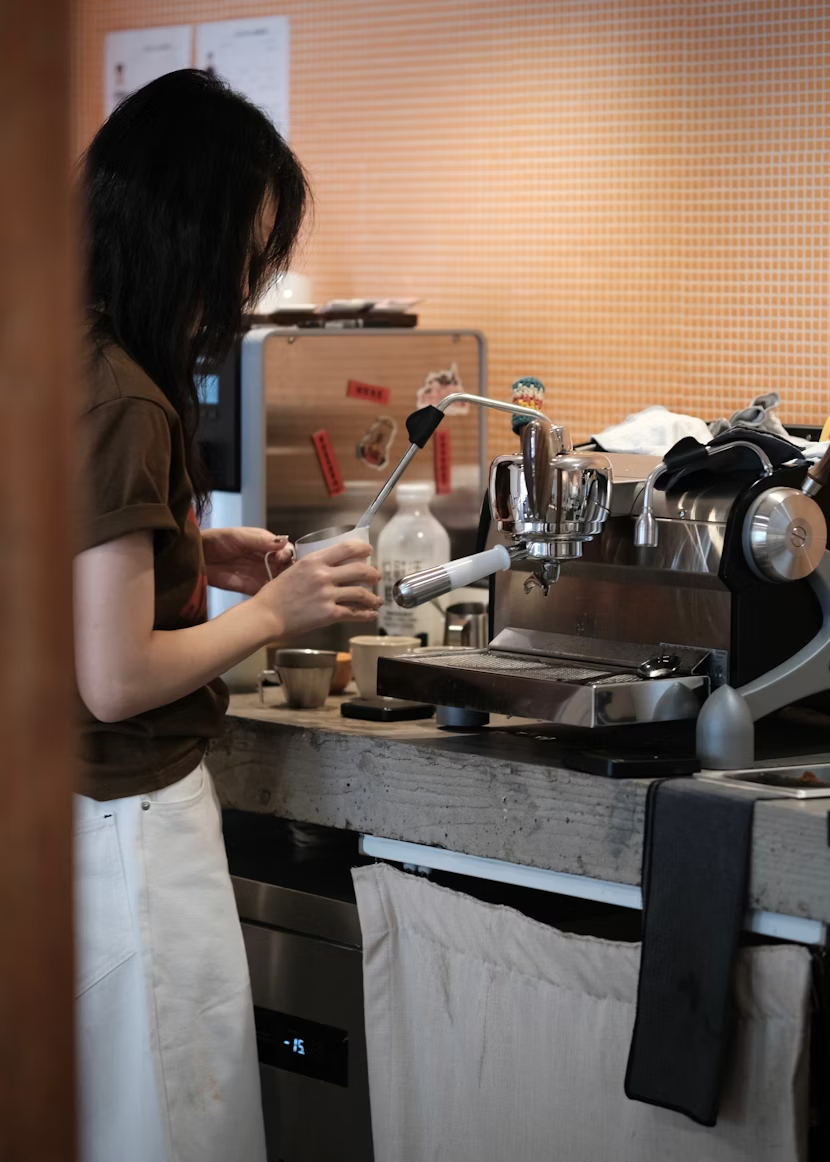
Coffee shops are, in my humble opinion, a severely underused college resource. It’s a place to decompress from the stresses of homework, exams, sports, and new friendships.
Common coffee mistakes (and how to avoid them)
Starting your coffee journey can be rough if you fall into a few beginner traps. The first and most common? Going too heavy on sugar. A frappuccino might look like a safe bet, but loading your drink with syrups, whipped cream, and caramel drizzle will only train your taste buds to expect dessert, not coffee. As Kalki puts it, “Tasting it black is always the best way to go. If your first cup of coffee is too sweet, every cup of coffee after that will taste sour. Besides, with sweet drinks, you’re not even really tasting the coffee. We’re not having candy here -- it’s coffee!”
Additionally, according to The Journal of Diabetes & Metabolic Disorders, coffee drinks loaded with sugar were found to be associated with increased rates of type II diabetes, a higher mortality rate, and increased rates of cardiovascular issues. Health risks aside, ditching the syrup and starting simple helps you learn what you actually like about coffee. You might be surprised how different roasts, brewing methods, and milk types change the flavor and mouthfeel of your coffee.
Another easy mistake? Not cleaning your equipment properly. Old residue or leftover dish soap can make your cup taste funky -- sometimes like chemicals, sometimes just “bleh”. If you’re brewing at home or in a dorm, rinse your mugs. I’m looking at you, freshman boys. I know how gross your dishes can get -- I was once one of you.
To ensure a clean cup of coffee, wash your mug thoroughly (for ~2 minutes) with soap and water, making sure to use a clean sponge. Rinse the mug out once, and dry the inside with a paper towel. Then, repeat the last step at least 2 more times. This is key in ensuring all the soapy residue is gone from the inside of the mug, leaving you with the pure, unadulterated taste of good coffee.
Also, try to avoid panicking and giving up on coffee as a whole if you don’t love your first cup. Julian Diaz remembers, “The first time I had a cup of coffee, it was back on the rancho, en Mexico, when I was like 9 years old. It was disgusting homes -- I could only handle one sip. It wasn’t till I was older that I started to like the taste. I love it now. Tastes like straight gasolina. In a good way.”
Coffee can definitely be an acquired taste. Most people don’t fall in love at first sip. The key is patience: keep experimenting, try different styles, and before long, you’ll start to appreciate the complexity behind that bitter first impression.
How to buy coffee for cheap
I know what you’re thinking. “I’m poor! I can’t afford all those trips to the coffee shop!” Welcome to the club. The good news is, you can still drink coffee -- even if you’re on a brokie budget.
Buy beans and brew at home or in your dorm. A $15 bag of decent beans can last up to a month, and a simple pourover setup with a kettle, Chemex, and a few filters can cost you less than $40.
Campus cafes often give discounts. Try bringing your own mug! Lots of places give 10-20¢ off for helping save the environment. Thanks for saving the world, Superman!
Try to learn to make cold brew! Mix coffee grounds with cold water in a container (we’ll talk about the perfect coffee-to-water ratio later), give it a good stir, and let it sit overnight in your refrigerator or a dorm minifridge. After 24 hours, strain the concoction through a filter so you’re not left with any muddy grounds and -- boom -- you’ve got cold brew for the rest of the week.
You’ll save a ridiculous amount of money compared to buying $6 Starbucks lattes every morning, and hey, you might learn something new! That’s what college is all about, isn’t it?
How to buy your first bag of coffee (and what to look for)
Now, before you go buy the first bag of beans you see at the grocery store, you’ll want to have a little technical know-how of the differences between each bag. Thankfully, most bags of coffee are labeled with the 6 most important bits of info
1. Origin of Coffee (Where it’s grown)
The country and region where the coffee tree is grown influences the flavor in the cup big time. The temperature, soil type, and amount of rainfall in a region all has a big impact on how the bean comes out. For example, Ethiopian beans are often fruity and floral, while Colombian beans tend to be nutty and smooth.
2. Elevation of Coffee (How high it’s grown)
The higher the elevation the coffee was grown at, the better the taste. Don’t just take my word for it -- according to an NIH study, Beans grown at higher elevations tend to develop more slowly, leading to brighter acidity and more complex flavors. Lower-elevation beans grow faster, and so they don’t have as much time to develop complex flavors in the same way. These usually taste simpler, with more earthy or chocolatey notes.
3. Coffee Variety (Strain)
Just like wine grapes (and weed), the coffee tree has a handful of different strains, but the ones you see the most are:
Arabica: the original, high-quality coffee species. According to Coffeefuze, it’s the strain that most coffee drinkers worth their salt prefer. It offers smooth yet complex flavors that can range from bright and tangy, to dark and earthy, depending on how it’s roasted and where it’s from. The drawback? Arabica trees are delicate, high-maintenance princesses. They need to be grown at high elevations, with cool temperatures, steady rainfall, and constant cultivation to protect from pests and disease. All these requirements mean that Arabica trees can only grow in a handful of parts of the world, requiring international shipping for coffee drinkers in the U.S. While all these conditions up the price of the coffee by a few dollars per cup, Arabica consistently delivers the highest quality coffee, and should always be your go-to option.
Robusta is the easier-to-grow coffee tree. According to Coffeefuze, Robusta trees can handle a much wider range of elevation, temperature, and humidity, and are more resistant to disease. Its adaptability makes it much cheaper to grow, which translates to a cheaper cup of coffee. The drawback? It tastes like boiled hotdog water. If you want my advice -- avoid Robusta at all costs, no matter how cheap it looks on the menu. Your taste buds will thank me.
4. Processing Method (How the fruit was handled after harvest)
Processing changes how much of the coffee cherry’s natural sugars make it into the bean. “Washed” coffees taste clean and crisp, while natural (dry) coffees are fruity and heavier, but offer more complex flavor profiles.
There’s also a few outliers: honey process and anaerobic process, but for brevity’s sake we’ll just leave it at Naturals vs. Washes.
5. Roast Level (How dark / light it’s roasted)
Light roasts are bright and acidic, showing off the bean’s origin flavor.
Medium roasts strike a balance between sweetness and body (and are excellent for beginners), while dark roasts are bolder, smokier, less complex, and pair great with a splash of cream.
6. Freshness / Roast Date
Freshly roasted beans (within two to four weeks) keep more of their oils and aroma. Older beans lose flavor and start tasting flat or papery. You’re a special cookie! No stale coffee for you.
Buying your first bag of beans can be nerve-wracking, especially if the bag costs half your net worth (you go, unemployed kings!). But in reality, there’s no need to be nervous. As Kalki put it, “Picking out your coffee is all about knowing your palate. Coffee tasting is different. What flavor do you like? Do you like it dark? Do you like it light?”. Lean into your natural preferences. If you prefer a tangy, fruity pop in your coffee, then you might want to try an Ethiopian, natural-process, light roast. Those 3 variables encourage bright and fruity flavors to come out.
On the other hand, if you prefer earthier, mellower, smoother coffee, you might want to try a Colombian, wash-process, dark roast. Each of these 3 variables encourages the smooth, nutty, chocolatey notes to come out.
If you’re not sure what you like, that’s totally fine! Try a medium roast, and go from there. Slowly sip the coffee, and contemplate which parts of it attract you. You can figure out your preferences from there. It’s an amazing journey of self-discovery!
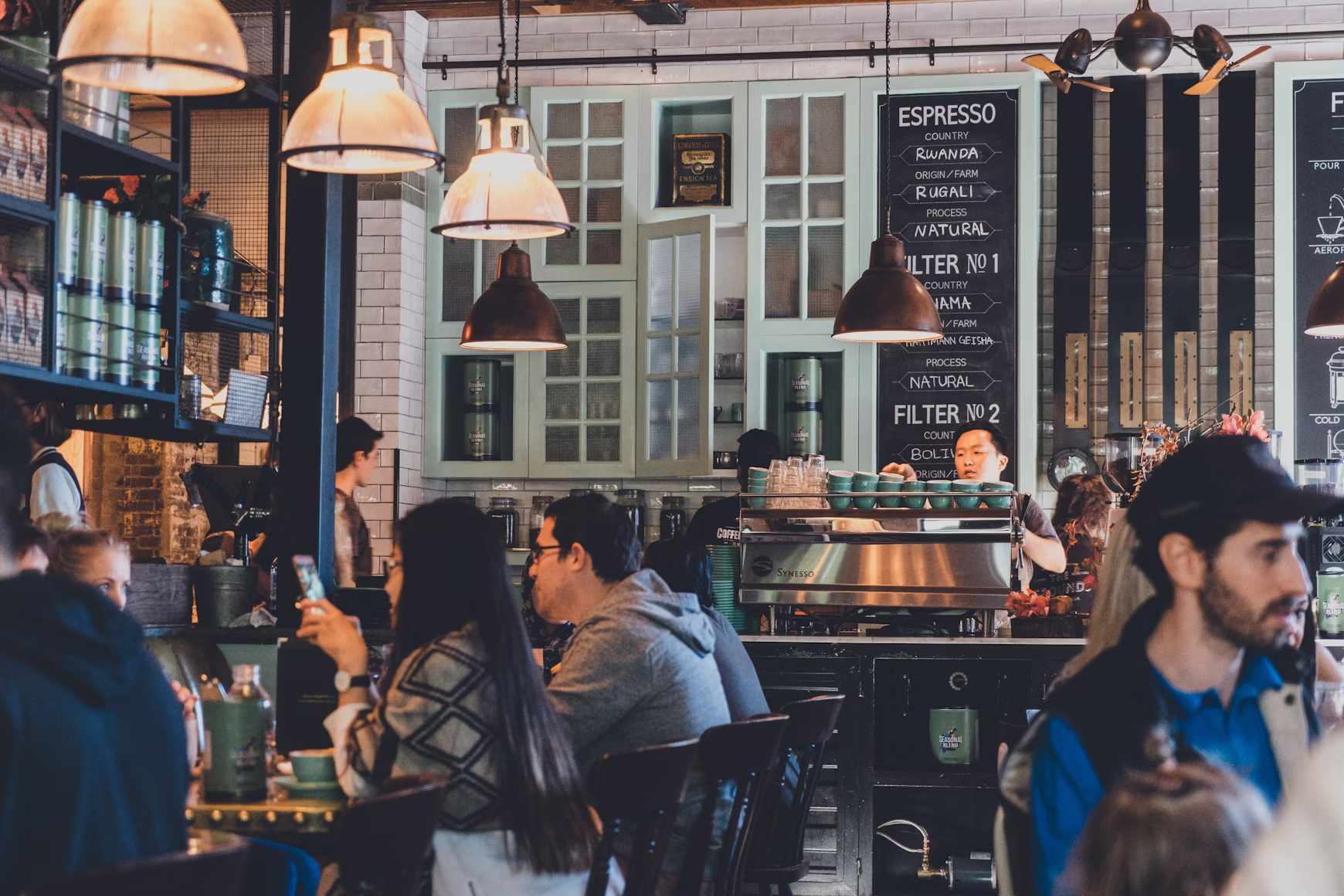
The science behind coffee and when you should drink it
Timing your coffee actually matters, but to figure out when to drink coffee, we first have to dip a toe into the science behind coffee. I know, I know, but I promise to keep it quick.
For starters, let me tell you about a little chemical in your brain called “Adenosine”. Adenosine is what I like to call the “fatigue chemical” -- it prevents a lot of important chemicals from flowing in your brain, such as:
Dopamine -- associated with motivation and mood
Glutamate -- associated with focus, reaction time, and awareness
Acetylcholine -- associated with attention, working memory, and feeling “locked in”
Norepinephrine -- associated with alertness, vigilance, and concentrating on one thing
Cortisol -- associated with alertness, urgency, restlessness, stress
By inhibiting all these chemicals, adenosine makes it to where none of them can flow properly. Ever wonder why you feel like a zombie after staying awake for 36 hours? It’s because adenosine is produced by being awake, and gets zapped by sleeping. If you’re awake for 36 hours, your brain will have 36 hours worth of adenosine swimming around in it. This means all of those chemicals’ flow is getting blocked, leading to you feeling:
Lack of motivation, and being in a crabby mood (no dopamine)
Lack of focus, slow reaction times, and tunnel-vision (no glutamine)
Inattentive, forgetful, and unable to stay on task (no acetylcholine)
Unaware, lethargic, and unable to concentrate (no norepinephrine)
Lack of alertness, urgency, and motivation (no cortisol)
Now, here’s where coffee (aka, caffeine) comes into play. Scientifically, it does one major thing: blocks adenosine. The way caffeine does this is actually pretty crafty and sneaky -- here’s how.
The caffeine chemical is essentially adenosine’s non-evil twin; the two chemicals look almost identical. Caffeine essentially tries to take adenosine’s parking spots, and your brain -- thinking it’s adenosine, doesn’t tow it away. Pretty soon, almost all of adenosine's parking spots get taken up by caffeine.
With the science in mind, let’s use it to figure out the best time to drink it, and how to (scientifically) avoid a crash.
Remember -- adenosine gets naturally zapped by your brain during sleep. So when you first wake up, your adenosine levels are basically at 0. On top of that, your body’s already making cortisol to get you up and out of bed quickly.
This means that if you slam coffee right after you wake up, you’re “blocking” adenosine that’s not even there, and stacking cortisol on top of cortisol, which basically makes you tweak out. That’s why I recommend waiting about an hour after waking up before drinking your first cup of coffee. That’s when adenosine starts creeping in, and the “WAKE UP!” cortisol starts fading.
As much as I’ve badmouthed adenosine in the last section, you do actually need it to do its job. According to the National Library of Medicine, it’s actually really tough to fall asleep without proper adenosine flow. Caffeine has a “half-life” of 6 hours, which is science-speak for: Caffeine fades away by 50% roughly every 6 hours. This means that 12 hours after you get a caffeine hit, about 75% of adenosine’s parking spaces will have opened up again, which is enough to allow enough adenosine to flow back and make you feel tired.
What does this translate to in practice? No caffeine less than 12 hours before bed -- you won’t have enough adenosine to fall asleep!
The learning curve of making coffee yourself
Making coffee at home is an art and a struggle. The first few tries might taste like battery acid or dirt water. That’s normal. Start simple. Use pre-ground beans (no need to ball out on a grinder until later), carefully measure your water-to-coffee ratio. According to Lizzy O’Connor, a third-year barista at Addis, 250g of water to every 15g of coffee is the best ratio. But remember, keep experimenting. Taste as you go, and change your coffeemaking method. Once you get the hang of it, you can start experimenting with different brewing methods (French press, espresso, AeroPress). Each one has its own vibe and flavor profile. Pretty soon you’ll learn how to make coffee that tastes better than Starbucks (which is honestly not that hard to do, their beans are some over-roasted robusta garbage) and at a tenth of the cost.
The 7 secret steps to making the perfect dorm coffee
I’ve been making coffee every morning for years, so I’d be honored to share with you my 7 secret steps to the perfect pourover.
I start by grinding 20 grams of beans a little finer than medium. I LOVE that fruity pop in the cup, so I tend to buy Ethiopian, natural process, light roasted beans to bring as much of that out as possible.
I put the bleached filter into my Chemex, and carefully pour the grounds into the filter, and move the whole apparatus onto my kitchen scale, and zero out the scale.
I then need to figure out how much water I’m gonna put on those 20 grams of beans. Using Lizzy’s golden ratio of 15 grams of coffee to 250 grams of water (aka 1:16.66), I do some back-of-the-napkin math (20*16.66) and end up deciding on using 333 grams of water as my target end-amount.
Once the water’s boiling in my kettle (for obvious reasons, you will want to boil more than 333 grams of water -- you lose a lot of it to steam), I start with the first pour, “the bloom”. The bloom should only use 10% of the total water mass (which is why it’s important to calculate out how much your total will be). So, I pour 33 grams of hot water onto the coffee grounds in a circular motion, making sure to “activate” all the grounds.I let it bubble and breathe for about 30 seconds, taking in the mouthwatering aroma (that never gets old).
After the bloom settles down, I start the second pour, again in a circular motion, which should be about 55% of total mass, or in my case, bringing the scale up to 183 grams of water.
Once the grounds dry up a bit, I go in for the last pour and take it all the way to 100%, or until the scale reads 333 grams.
When the dripping finally stops, I take the filter out, swirl the coffee (not sure why I do this, but it feels fancy), and pour it into my cup. I’m always sure to let it cool for a few minutes -- cooler coffee tastes way better, especially with fruity naturals.
Once the wait’s done, I take a sip and (hopefully) silently high-five myself for not botching another pot!
Conclusion
Starting your coffee journey in college doesn’t have to be confusing or expensive. Try different drinks, learn what you like, and don’t be afraid to make mistakes -- everyone burns a pot or two (or twenty, in my case). No matter the number of screw-ups, once you figure out your routine, making coffee can become one of the most enjoyable parts of your day. Whether you’re annoying your roommates by grinding beans at 7 a.m. or cramming for finals week at 3am with an IV drip of Arabica, if you learn the proper ways to start drinking coffee and take some time to appreciate the surrounding coffee culture, you’ll be part of a tradition older than your college itself. Cheers!

Johnny McGillen is a business management & entrepreneurship student at North Central College, and a devout coffee nerd who’s made every coffee mistake in the book so you don’t have to. When he’s not brewing something new, he’s probably typing this exact sentence at 2 a.m. in a study lounge somewhere.