
Scrolling and Struggling: Digital Life’s Mental Health Toll and Solutions for College Students
By Emma Fry
Fall 2025
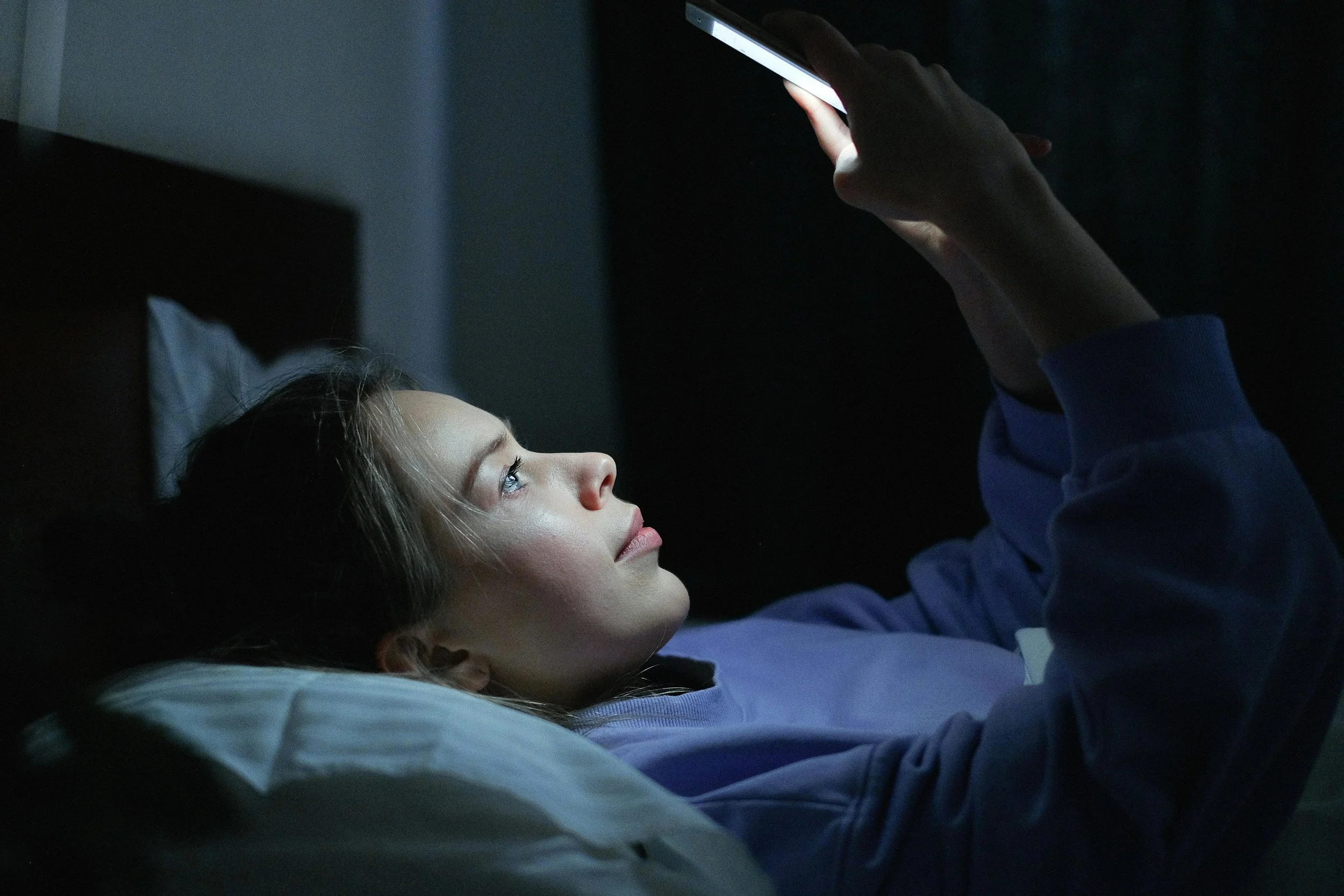
Have you ever fallen victim to endless scrolling when you’re supposed to be working on homework? We have all been there, but did you know that too much screen time affects your mental health? According to a study conducted in the Journal of Technology in Behavioral Science, they define screen time as “... the average amount of time spent in a typical day observing or interacting with electronic devices that deliver content through on-screen displays.” Screen time use in college can have major effects on students’ mental health. Researcher Tassia Oswald explains how increasing screen time may be associated with more mental health problems. Throughout this blog, we will dive deeper into topics like:
Recognizing how screen time affects your mental health
Limiting screen time to help balance your mental health
Managing your screen time usage
Relaxing when you feel overwhelmed
Now let’s take a look at just how much screen time can impact your mental health.
How Screen Time Takes a Toll on Your Mental Health
Screen time plays a big role in your mental health, even if you aren’t fully aware of it. According to a study conducted in the Journal of American College Health, they find that high screen time exposure is associated with worse quality of life in college students, more specifically, mental and social health. Along with screen time affecting your quality of life, it also influences more specific factors like depression, anxiety, and reduced focus on tasks. As stated by William Zhou in a 2025 study, screen time is associated with increased depressive symptoms and anxiety, as well as negatively impacts academic performance due to reduced focus and increased procrastination.
Screens for leisurely activities tend to make us less productive in our academic tasks. Morgan Piontek, a senior at North Central College, gives her take on screen time distractions: “It affects my productivity, and then if I'm not getting stuff done, then I feel like I’m behind.” Screen time not only affects your productivity but also your sleep quality. Based on the research conducted by the CDC (Center for Disease Control and Prevention), they explain that high screen time has been associated with:
Late bedtimes
Short sleep spans
Worse sleep quality
Insomnia symptoms
Increased daytime sleepiness
The CDC then goes on to explain how high screen time can also influence a person’s circadian timing as well as alertness due to the light emitted from screens themselves. Your circadian rhythm prepares your body for expected changes in the environment, for example: the time for activity, the time for sleep, and the time to eat. The CDC also describes how blue light impacts our sleep. Light has an impact on your body’s internal clock (circadian rhythm). When morning light hits your eyes, it triggers your body to release hormones that help you wake up and feel alert. Blue light has the strongest effect since it is a part of natural daylight, which means it tends to wake you up more when scrolling before bed. Screens play a big part in the quality of sleep you’re getting. As a college student, prioritizing a good night’s sleep is crucial for functioning at our best every day.
Sleep can also negatively impact your mental health. As stated by Mubashir Gull in a 2024 study, “Sleep length and screen time were highly correlated with the intensity of depressed symptoms.” This shows that sleep can play a significant role in a student's overall mental health, and that both factors are influenced by screen time usage.
We have discussed how screen time can affect your mental health, but let’s talk about some ways that we can find a better balance between the two by decreasing your time on screens.

How to Limit Screen Time to Better Balance Your Mental Health
Screen time isn’t always a bad thing, but spending too much time on our screens is. Here are some ways we can have a balance between screen time usage and protecting our overall mental health as college students:
Spend time outside
Engage in physical activity
Get enough sleep
Set a screen time limit and be intentional
Use your support system
Spending time outside or in nature (sometimes referred to as “green time” in academic studies) can help reduce some mental health struggles one may be feeling in college. In a previously mentioned study conducted in the Journal of American College Health, they describe that “Screen time was associated with increased anxiety, depression, and stress in college students, while green time was associated with lower stress and depression.” Also, Oswald brings up another great point within her research: natural environments may enable attention restoration and stress reduction… increasing green time may help reduce screen time, to promote mental well-being in an inescapably high-tech era. Spending time outside can help lower mental health struggles in college students. This can then promote a healthier relationship with screen time by getting students off their phones and encouraging them to be outside more.
Physical activity can also be a great outlet for managing screen time and improving your mental well-being. Researcher Madison Chandler, in a 2024 study, explains that higher levels of engagement in physical activity have been associated with lower levels of anxiety, depression, and perceived stress… physical activity may serve to minimize the increased risk of poorer mental health that is associated with high screen time. By engaging in physical activity, we see that it can lead to lower mental health issues, which can further lead to a decrease in screen time usage.
Sleep is another big factor for balancing one’s mental health and screen time in college. Chandler brings up another important point to help manage students’ mental health and screen time usage, a valuable health behavior one might consider when having a negative relationship with screen time and stress is sleep. She goes on to explain that a shorter sleep duration has been linked to poor mental health outcomes like increased stress. Not getting enough sleep can greatly affect your mental health and may increase your screen time, because if you aren’t sleeping, you most likely tend to reach for your phone more while in bed. Sleep is very important for your mental health, especially when in college, since it is a new routine and your classes are constantly changing every semester. Using screenless winding-down techniques when getting ready for bed can help you fall asleep and, at the same time, get you off your screen before bed. Getting enough sleep is crucial to keeping up with the hectic college lifestyle.
Setting a screen time limit can also help you manage screen distractions and improve your mental health. Piontek incorporates this into her everyday life, “I added a widget to my home screen on my phone that tells me my screen time usage for the day… I kind of set a goal for myself, and then I can keep checking if I open my phone up, so then that limits me from using it.” This helps her keep track of her limit and see where she may need to adjust her screen time if one app is more highly used than the others. It can also help you realize what you use your phone for and just how much time you might spend on it. Nicole Musni, a Licensed Clinical Counselor and Director of Counseling at the North Central College Dyson Wellness Center, brings up a great point surrounding this issue: “I think if we just could have more realistic and insightful and intentional thought behind our screen time, then maybe we could be in a better place too. Also, just the boundaries like when to say no, when to recognize this is an unhealthy app for me.” We aren’t always aware of this issue, so setting a limit can give more insight into this problem, as well as being more intentional about how we utilize our screens.
Reaching out to someone if you need to talk can really help. If you’re mentally struggling, sometimes scrolling just makes it worse because social media tends to be a highlight reel most of the time. Musni states, “There’s so much we can do to support anxiety. If a student doesn't have coping strategies or they feel it’s unmanageable, they should talk to someone about it… utilize your support system. Sometimes just taking a break and talking to a loved one that you trust can really help.” There are times we just need to vent to someone, so talking about your struggles can help tremendously. Take a break from scrolling on your phone and call or text a friend or family member. Talking a problem out can help you break it down into smaller and more digestible parts to work with. This can help you feel better mentally and help to balance your screen time by socializing with others.
Since we have looked at the benefits of balancing your screen usage with your mental health, let’s dive deeper into just how you can manage your screen time.

Reaching out to someone if you need to talk can really help. If you’re mentally struggling, sometimes scrolling just makes it worse because social media tends to be a highlight reel most of the time.
How to Manage Your Screen Time
Managing your screen time usage can be a tricky thing to grasp in college. We’re all so used to having our devices with us at all times. For example, utilizing screens during class, like taking notes or texting, or even at the dinner table, we don’t fully interact with one another due to screen distractions. Nicole Rivera, Professor of Psychology at North Central College, explains, “If we have our devices with us, even if we are not actively using it, we see that it's distracting us and it's pulling our attention away from a task.” As a college student, I tend to struggle with making sure to put my phone down when working on homework. I am always tempted to pick it up, so sometimes I will set a 30-minute timer and work for 30 minutes and then take a short break. This helps me focus on one thing for the time I set, and then I can take a break and move on to the next task or assignment seamlessly.
Now we will explore some more tips to help limit your screen distractions. According to Maureen Salamon at Harvard Health Publishing, it is helpful to cut back on screen time because the more we scroll, the more we feel we need to keep scrolling.
Here are a few more ways that she suggests we limit our screen distractions to give our body and brain a little break:
Keep your phone off your nightstand or out of reach when you’re sleeping or unwinding for the night
Put your phone away when you’re socializing with others, for example, in your bag or pocket
Place your phone away from you when you’re working on homework or another task where you need to focus
Turn off notifications so that you can be fully present in the moment or complete a task without distractions
Focus on other things, which may include volunteering, reading, crafting, or socializing with a friend or family member
Now moving on from talking about how to manage screen time, let’s discuss how we can relax if we’re feeling overwhelmed or stressed.
How to Relax (Without Screens) When You’re Feeling Mentally Overwhelmed
Trying to unwind when you’re feeling stressed can sometimes be hard, especially when you’re in a new environment like college. Samantha Boardman, a clinical instructor in psychiatry, states that, “When feeling overwhelmed, the best thing you can do is exactly the opposite of what you feel like doing. Pulling into your shell, and taking on unchallenging, low-effort activities may appeal to our instinct for self-protection, but don’t sustainably revitalize us.” This can be really helpful to think about when you’re stressed. For example, if you feel like isolating, detach from your screens and maybe try talking with a friend, or do something for someone else. Even just thinking about what you have already done and how accomplished that makes you feel can help reduce some of the stress you may be feeling.
Taking small screenless breaks throughout your day might also help if you’re struggling to manage your stress. Musni illustrates that, “When we’re feeling really overwhelmed, it’s hard to think clearly… It’s okay to pause and step back and take a moment to breathe and maybe even intentionally doing deep breath work so that you can feel more grounded again.” Musni also then goes on to say that we might need to consider how we take the big and overwhelming things in our lives and break them up into smaller and more digestible pieces. Feeling stressed can affect us in so many ways. Sometimes we need to acknowledge that we need a small break from our screens and that it is okay to take breaks because that will benefit us so much in the long run.
Stress can take a huge toll on your sleep quality. Winding down before bed makes a huge impact on your sleep. Researchers from the Headspace Editorial Team find that, “By practicing the same calming actions each evening, you create powerful associations between those activities and sleeping better. This behavioral cueing helps lower body temperature, slow racing thoughts, and promote relaxation.” Completing the same relaxation techniques each night can help you feel less overwhelmed and improve your sleep as well.
Now you might be asking, “Well, what are some screen-free relaxation techniques that I can implement into my busy college lifestyle?” Well, let's see! According to author Emilina Lomas at Oura, she displays ways to wind down before bed. Some of these include:
Reading a book
Drinking tea
Going for a walk
Adjusting the lights
Practicing breathing or visualization exercises
Meditating
Taking a warm shower
Stretching
Journaling or drawing
Listening to music, a podcast, or an audiobook
Doing your skincare
Let’s take a final look at how creating a balanced approach to screen time can truly benefit you.
Creating a Balance That Benefits You
We live in such a technology-filled world today, so balancing the effects of screen time can be very challenging but also crucial for a student's mental health. Let’s recap some ways that you can be screen-free while balancing your screen time and mental health:
Spending time outside
Getting quality sleep
Participating in physical activity or stretching
Setting a screen time limit
Meeting up and talking with friends or family
Reading or journaling
Remember, it’s okay to put your phone away sometimes and do things for yourself. This helps you unwind and check in on yourself and your mental health. Try implementing some of these techniques into your daily life to improve your screen time usage and overall mental well-being.

Emma Fry is a senior at North Central College and is graduating in May of 2026. She is majoring in marketing and minoring in psychology. She runs the social media for the Cardinal Crochet Club at North Central College. In her free time, she loves to do lots of various crafts as well as read. She is passionate about creativity. She hopes to work in social media marketing and wants to bring her love and passion for creativity into her future career working in the marketing field.